

Term Life Insurance
Life is unpredictable, but your family’s financial security doesn’t have to be. Term life insurance offers Canadians an affordable way to ensure their loved ones are protected when it matters most. Whether you’re a young professional just starting out or a parent planning for your family’s future, understanding term life insurance could be one of the most important financial decisions you’ll make.
But here’s what most Canadians don’t realize: the cost of waiting could be far greater than the cost of coverage itself. Let’s explore why term life insurance might be the financial safety net your family needs – and discover some surprising facts about coverage that could change how you think about life insurance entirely.
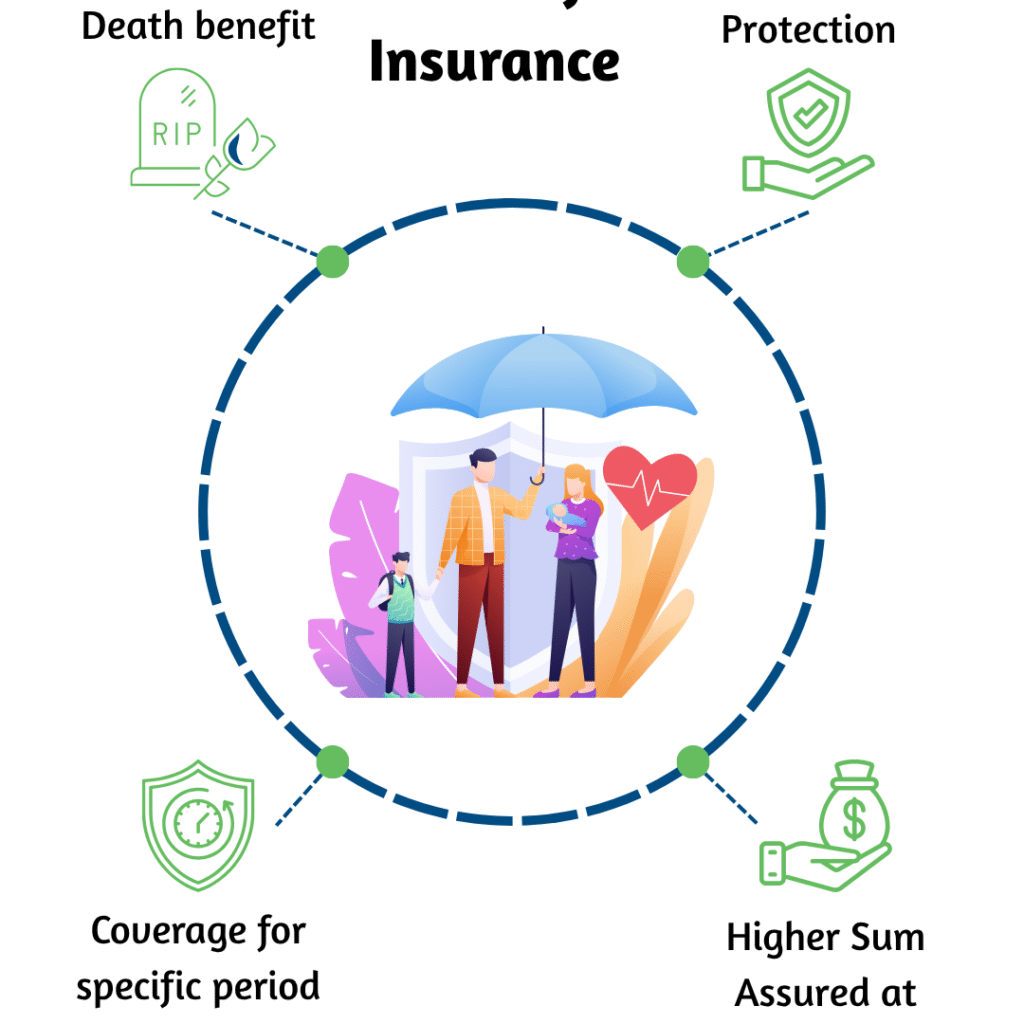
Term life insurance is the most basic type of life insurance policy. It provides coverage for a specified period, usually ranging from 5 to 30 years, as opposed to permanent life insurance which provides lifelong coverage. In case of the policyholder’s death within the policy term, the beneficiaries receive a death benefit payout. The premiums for term life insurance are relatively low compared to other types of life insurance policies. However, the policy does not have any cash value or investment component.
What is Term Life Insurance?
Term life insurance is temporary life insurance coverage for a specific period, typically ranging from 10 to 30 years. If the policyholder passes away during the term, their beneficiaries receive a tax-free lump sum known as the death benefit. Unlike permanent life insurance, term policies don’t build cash value – they’re pure insurance protection. This focused approach makes term life insurance significantly more affordable, allowing you to secure substantial coverage during the years when your family needs it most.
Think of term life insurance as financial protection for life’s biggest expenses and responsibilities. Whether it’s paying off your mortgage, funding your children’s education, or replacing your income, term life insurance ensures these critical needs are met even if you’re no longer there to provide for them.
Why Canadians Choose Term Life Insurance?
Affordability That Fits Your Budget: Current rates (as of June 2025) show that healthy 30-year-old females can secure $100,000 of coverage for as little as $8.19 per month – less than what many Canadians spend on their daily coffee. This accessibility makes it possible for virtually any working Canadian to afford meaningful life insurance protection.
Maximum Coverage When You Need It Most: Your twenties, thirties, and forties are typically when your financial responsibilities peak. You’re paying off student loans, saving for a home, starting a family, and building your career. Term life insurance provides maximum coverage during these crucial years when your family would face the greatest financial hardship if something happened to you.
Flexibility for Changing Life Circumstances: Life doesn’t follow a straight path, and neither should your insurance. Term life policies offer conversion options that allow you to transform your temporary coverage into permanent protection without medical exams. This flexibility ensures your coverage can evolve as your needs change.
In Canada, where the cost of living continues to rise and financial planning is more important than ever, term life insurance offers a practical solution for:
- Young families looking to protect their children’s future
- Homeowners with a mortgage to cover
- Business owners securing their company’s continuity
- New immigrants seeking affordable coverage while settling in
It’s a flexible, budget-friendly way to ensure your loved ones aren’t left with financial burdens.
How Much Term Life Insurance Do You Need?
Determining the right coverage amount shouldn’t be guesswork. The LIFE approach provides a comprehensive framework that Canadian families can use to calculate their exact insurance needs, ensuring nothing important gets overlooked.
L – Liabilities and Debts: Start by listing all your outstanding debts that would burden your family
- Mortgage balance (average Canadian mortgage: $280,000)
- Credit card debts and personal loans
- Car loans and other secured debts
- Business debts or guarantees
- Tax liabilities and final expenses
I – Income Replacement: Calculate how much income your family would need to maintain their lifestyle
- Annual household income your family depends on
- Number of years they’d need support (typically until children are independent)
- Consider inflation and changing needs over time
- Factor in government benefits like CPP survivor benefits
F – Final Expenses: Plan for immediate costs your family will face
- Funeral and burial expenses ($8,000-$15,000 in Canada)
- Probate fees and estate administration costs
- Outstanding medical bills not covered by provincial health plans
- Legal fees for estate settlement
- Emergency fund for immediate family needs (3-6 months expenses)
E – Education: Secure your children’s educational future
- Post-secondary education costs ($20,000-$30,000 per year per child)
- Private school tuition if applicable
- Educational savings plan contributions (RESP matching)
- Professional development or specialized training costs
- Books, supplies, and living expenses during studies
LIFE Calculation Example:
- Liabilities: $300,000 (mortgage + debts)
- Income: $500,000 (10 years × $50,000 annual need)
- Final Expenses: $50,000 (funeral + emergency fund + estate costs)
- Education: $150,000 (2 children × $75,000 each for university)
- Total Coverage Needed: $1,000,000
Factors Affecting Your Premiums
Age
Younger individuals pay lower premiums.
Health & Lifestyle
Healthier individuals pay lower premiums. Smoking, dangerous hobbies, and risky occupations can increase premiums or require specialized coverage.
Coverage Amount
Higher death benefits result in higher premiums, but the cost per dollar of coverage often decreases with larger policies.
Gender
Women typically pay slightly lower rates due to longer life expectancy.
Types of Term Life Insurance
- Level Term Life Insurance: This is the most traditional type of term life insurance. The premiums and death benefit remain the same for the duration of the policy. It’s ideal for Canadians who want predictable costs and stable protection.
- Decreasing Term Life Insurance: The death benefit decreases over time, while the premiums remain the same. This type of policy is often used to cover a specific debt or financial obligation (e.g. mortgage)
- Increasing Term Life Insurance: The death benefit increases over time, while the premiums remain the same. This type of policy is designed to keep pace with inflation.
All of these types of life insurance usually provide features such as:
- Renewable Term: Allows you to renew your policy at the end of each term without medical exams. While convenient, premiums increase with each renewal based on your attained age.
- Conversion to Permanent Life Insurance: Provides the option to convert your term policy to permanent life insurance without medical underwriting. This feature offers valuable flexibility for changing circumstances.
Pros and Cons of Term Life Insurance
Pros:
- Affordable: Term life insurance tends to be more affordable than permanent life insurance, making it an attractive option for those on a budget.
- Flexibility: The policyholder can choose the length of coverage that best suits their needs and budget.
- Simplicity: Term life insurance is straightforward and easy to understand.
- Convertible: Many policies allow you to convert to permanent insurance later.
Cons:
- Coverage Limitations: Term life insurance provides coverage for a specific period, after which the policy expires. If the policyholder outlives the term, there is no payout.
- No Cash Value: Unlike permanent life insurance, term life insurance does not build cash value over time.
- Premium Increases on renewals: If you renew after the term, expect higher premiums due to age.
Who Should Consider Term Life Insurance in Canada?
If you’re a Canadian resident with temporary financial responsibilities – like raising children, paying off a mortgage, or covering business loans – term life insurance is likely your best bet. If you need lifelong coverage or the ability to build cash value, permanent life insurance may be a better choice.
It’s especially suitable if:
- You’re in your 20s to 50s and want maximum coverage at a low cost
- You’re starting a family or buying a home
- You’re self-employed or a small business owner
- You want to lock in coverage while you’re healthy
Term vs. Whole Life Insurance: What’s the Difference?
| Feature | Term Life Insurance | Whole Life Insurance |
|---|---|---|
| Duration | Fixed term (e.g., 20 years) | Lifetime coverage |
| Premiums | Lower | Higher |
| Cash Value | None | Yes, grows over time |
| Flexibility | High | Moderate |
| Ideal For | Temporary needs like income replacement or debt coverage | Long-term planning, estate preservation, wealth transfer |
Why chose Minesh as your Independent Broker?
Unbiased Advice
I represent multiple insurance companies and can objectively compare options to find the best fit for your needs and budget.
Service philosophy
My service philosophy is built on transparency, accessibility, and genuine client advocacy. I provide free, no-obligation consultations coupled with pressure-free, honest guidance that prioritizes your interests over sales quotas. You’ll never experience pushy sales tactics or feel pressured to make immediate decisions.
No Additional Cost
Insurance companies pay broker commissions, so working with me doesn’t cost you anything extra.
Access to Multiple Carriers
Different companies excel in different areas. I can access specialized products and competitive rates across the market.
Personalized Service
You’ll work directly with me throughout the process, ensuring personalized attention and ongoing support. Every plan I develop is personalized to suit your individual needs, budget considerations, risk tolerance, and long-term financial goals.
Advocacy
If issues arise with your policy, I advocate on your behalf with the insurance company.
Consumer Protection and Industry Standards
When choosing term life insurance in Canada, you’re protected by robust regulatory oversight. All life insurance companies operating in Canada are regulated by the Office of the Superintendent of Financial Institutions (OSFI), ensuring they maintain adequate reserves and follow strict solvency requirements to protect policyholders.
The Canadian Life and Health Insurance Association (CLHIA) sets industry standards and provides additional consumer protections, including standardized policy language and ethical guidelines that member companies must follow. This regulatory framework means Canadian consumers can purchase term life insurance with confidence, knowing their coverage is backed by some of the world’s strongest insurance regulations.
Taking the Next Step: Your Journey to Financial Security
Choosing term life insurance is about more than just numbers and policies – it’s about love, responsibility, and the peace of mind that comes from knowing your family will be okay. The decision to protect your loved ones financially is one of the most caring things you can do.
But here’s the reality: every day you wait, you’re gambling with your family’s financial future. Age increases premiums, health changes can affect eligibility, and life’s unpredictability means tomorrow might be too late.
The good news? Getting started is easier than you think. With online quotes, streamlined applications, and competitive rates, securing term life insurance protection can happen quickly and affordably.
Your family’s financial security is too important to leave to chance. The question isn’t whether you can afford term life insurance – it’s whether you can afford to be without it.
Ready to explore your term life insurance options? Want to know how much coverage you need? Or how much it’ll cost? I offer free, no-obligation consultations to help you explore your options. Get your personalized quote today and discover how affordable peace of mind can be.